

Table of Contents
- Step 1: Run a Tech Audit Before You Buy Any Long Lasting Smart Gadgets
- Step 2: Decode the Software Support Lifecycle for Smart Devices
- Step 3: Check the Repairability Score of Electronics Before Committing
- Step 4: Evaluate Build Quality, Battery Health, and Hardware Durability
- Step 5: Verify Ecosystem Compatibility and Interoperability Standards
- How Right to Repair EU Regulations Protect Your Smart Gadget Investment
- Long Lasting Smart Gadgets Comparison: What to Look For by Device Type
- Conclusion
Last Updated: August 2, 2026
Knowing how to choose long lasting smart gadgets is one of the most underrated skills a homeowner can develop in 2026. Most people focus on features and price, then discover two years later that their device no longer receives security patches. This guide from PrimeTimeGadgets covers the full longevity framework: from auditing your existing setup to decoding software lifecycles, repairability scores, and EU right-to-repair protections. Below, we'll show you exactly how to evaluate a smart device before you commit, so you stop paying for planned obsolescence and start building a home that actually stays smart.
A device's real cost is spread across its entire operational life, and the factors that determine that lifespan are rarely listed on the product page.
Step 1: Run a Tech Audit Before You Buy Any Long Lasting Smart Gadgets
Start with what you already own. Map every connected device: its brand, the protocol it uses, its current firmware version, and when the manufacturer last issued an update. This 30-minute audit reveals where your ecosystem has gaps and which devices are approaching obsolescence.
Map Your Existing Ecosystem and Connectivity Standards
Connectivity standards matter more than most buyers realise. Zigbee, Z-Wave, Wi-Fi, Bluetooth, and Thread are not interchangeable. The rise of the Matter standard, backed by the Connectivity Standards Alliance, is changing this. Matter-certified devices work across platforms, meaning a Matter-certified smart plug bought today should remain compatible with future hubs regardless of which ecosystem wins long-term.
According to Connectivity Standards Alliance Matter specification overview, Matter operates over Thread and Wi-Fi and is supported by major platform vendors, making it the most future-proof connectivity choice available in 2026.
Practical checklist for your ecosystem audit:
- List every smart device and its communication protocol
- Note the last firmware update date for each device
- Identify which devices require a proprietary hub or cloud service
- Flag any device whose manufacturer has been acquired, merged, or gone quiet
- Check whether your router supports the protocols your devices use
Identify Real Needs vs. Marketing Hype
A smart device that solves a real daily friction point delivers genuine cost-per-use value. Before any purchase, write one sentence describing the specific problem the gadget solves. If you cannot write that sentence, the need probably does not exist.
Step 2: Decode the Software Support Lifecycle for Smart Devices
The software lifecycle is the single most important factor in long-term gadget value. A device's hardware may function perfectly for a decade, but without firmware updates and security patches, it becomes a liability.
What a Product Support Window Actually Tells You
A product support window is the manufacturer's commitment to delivering firmware updates, security patches, and bug fixes after a product's launch. A short support window means your device will stop receiving security patches while still physically functional. For devices connected to your home network, this is an active security risk.
When evaluating any smart device, ask the retailer or check the manufacturer's documentation for:
- The stated end-of-support date or minimum support duration
- Whether security patches continue after feature updates stop
- Whether the device can function without cloud dependency if the service is discontinued
Many manufacturers in the Netherlands now publish this information under pressure from the EU Cyber Resilience Act, which establishes mandatory security requirements for connected products sold in the EU. As documented in EU Cyber Resilience Act official text, manufacturers must provide security updates for the expected product lifetime.
Firmware Archiving and Community Support as a Safety Net
Some devices develop active community firmware projects after official support ends. Projects like OpenWRT for routers or community builds for certain smart home hubs can extend a device's functional life by years. Before buying, check whether the device has an active community on forums such as the Home Assistant community or GitHub.
Step 3: Check the Repairability Score of Electronics Before Committing
The repairability score of electronics is a standardised measure of how easily a product can be disassembled, repaired, and have its components replaced. France introduced a mandatory repairability index in 2021, and the European Commission is extending similar requirements across the EU under the Ecodesign for Sustainable Products Regulation.
User-Replaceable Batteries and Spare Parts Availability
Battery degradation is the most common reason a functional smart device gets discarded. A device with a user-replaceable battery can have its power source swapped for a fraction of the cost of a new unit. When evaluating smart gadgets, check:
- Whether the battery is user-accessible without voiding the warranty
- Whether spare parts are listed in the manufacturer's EU spare parts catalogue
- Whether the manufacturer commits to spare parts availability for a minimum period
- The battery's rated cycle life, expressed as the number of charge-discharge cycles before capacity drops to 80%
A device with a sealed, non-replaceable battery and no spare parts availability is designed for planned obsolescence.
Step 4: Evaluate Build Quality, Battery Health, and Hardware Durability
Build quality is about the physical tolerance of components to heat cycling, humidity, and mechanical stress over years of use. Cheap capacitors, thin PCB traces, and low-grade plastic housings cause premature failure that no spec sheet will mention.
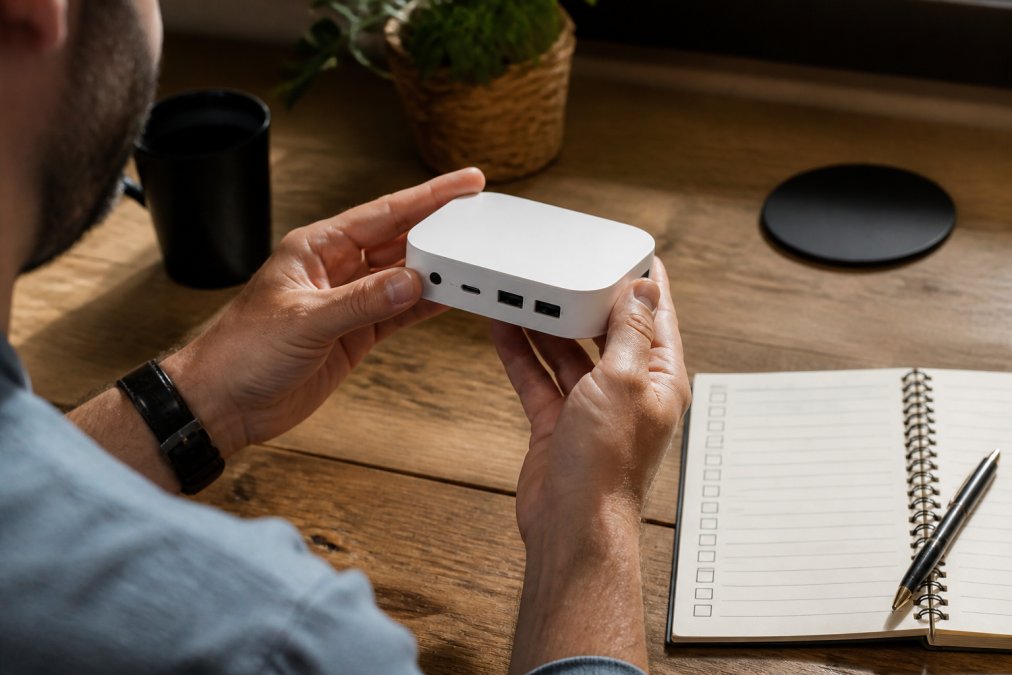
A person's hands carefully examining the ports, casing seams, and weight distribution of a smart home hub on a wooden desk, with a notebook open beside them and natural light coming through a nearby window.
Battery Cycle Life, mAh, and Wh Ratings Explained Practically
Battery capacity is measured in milliampere-hours (mAh) for smaller devices and watt-hours (Wh) for larger ones. The most useful figure for longevity is cycle life: the number of full charge-discharge cycles before dropping to 80% of original capacity. A battery rated for 500 cycles used once daily lasts roughly 18 months. A battery rated for 1,000 cycles lasts closer to three years.
When comparing devices, prioritise cycle life over raw mAh capacity.
Component Quality and the Cost-Per-Use Calculation
Cost-per-use is straightforward: divide the total purchase price by the number of days you expect to use the device. A device costing €80 that lasts four years costs roughly €0.05 per day. A device costing €40 that lasts 18 months costs roughly €0.07 per day. The cheaper device is the more expensive choice.
Step 5: Verify Ecosystem Compatibility and Interoperability Standards
Ecosystem lock-in is the hidden tax on smart home convenience. True interoperability means devices from different manufacturers can communicate, be automated together, and be controlled from a single interface.
Matter-Certified Devices and Local Storage vs. Cloud Dependency
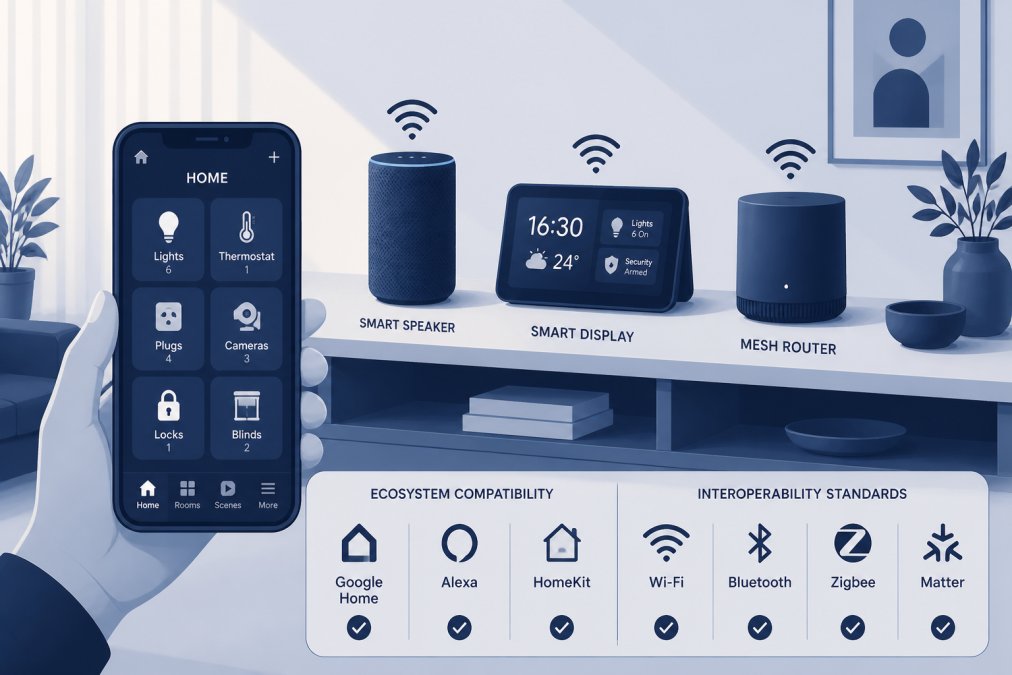
Matter-certified devices represent the current best answer to ecosystem lock-in. A Matter device works with Apple Home, Google Home, Amazon Alexa, and Home Assistant simultaneously. This is a structural advantage for longevity: if one platform discontinues support, your device continues to function on the others.
Devices that process and store data locally continue to function if the manufacturer's servers go offline. Devices that depend entirely on cloud infrastructure become non-functional if the company discontinues the service. This happened to several smart home brands in the Netherlands between 2022 and 2025.
Privacy and Data Security Longevity
Data privacy is a longevity issue. A device that continuously sends data to servers outside the EU may become non-compliant with the AVG (Algemene Verordening Gegevensbescherming, the Dutch implementation of the GDPR) if the manufacturer's data practices change. When support ends, data collection often continues while security patches stop.
Check whether the device's privacy policy specifies EU data residency, and whether local processing is available. Devices with local-first architectures are both more private and more resilient to manufacturer discontinuation.
How Right to Repair EU Regulations Protect Your Smart Gadget Investment
The right-to-repair movement has moved from advocacy to legislation across the EU. Dutch consumers benefit directly from the EU's Ecodesign for Sustainable Products Regulation and the related right-to-repair directive, which require manufacturers to make spare parts, repair tools, and technical documentation available for defined periods after a product is placed on the market.
According to European Commission right to repair directive overview, the regulation covers a growing list of product categories and requires that products be designed to be repairable.
Environmental Impact of Planned Obsolescence Under EU Law
Planned obsolescence is the practice of designing products to fail within a predictable, shortened timeframe. The EU's Sustainable Products Regulation explicitly addresses this, prohibiting certain design practices that artificially limit product lifespan. For Dutch consumers, this means a manufacturer who deliberately designs a device to stop functioning after a software update may be acting in violation of EU product law.
Electronic waste is one of the fastest-growing waste streams in the Netherlands. Choosing devices with high repairability scores, long software support windows, and user-replaceable batteries directly reduces the e-waste you generate and aligns with the Dutch government's circular economy targets.
Long Lasting Smart Gadgets Comparison: What to Look For by Device Type
The right evaluation criteria shift depending on the device category.
| Device Type | Key Longevity Signal | Minimum Support Window | Watch Out For |
|---|---|---|---|
| Smart speakers | Firmware update history | 5+ years | Cloud-only control |
| Smart displays | Matter or local API support | 5+ years | Discontinued app ecosystems |
| Smart plugs | Matter certification | 3+ years | Proprietary hub requirement |
| Smart locks | Local control option | 5+ years | Battery type and cycle life |
| Smart cameras | Local storage option | 4+ years | Mandatory cloud subscription |
| Smart thermostats | Open API / local control | 5+ years | Boiler compatibility gaps |
| Smart lighting | Zigbee or Matter support | 4+ years | Hub dependency |
Devices that fall short of these benchmarks in their category are likely to require replacement before they deliver full cost-per-use value.
Common Mistakes to Avoid When Choosing Smart Home Devices
The most expensive mistakes surface 18 months later when a firmware update breaks a feature, a company discontinues a product line, or a subscription price doubles.
The most common errors:
- Buying on brand recognition alone. A well-known brand is not a guarantee of long software support. Check the actual update history for the specific product.
- Ignoring the hub requirement. A device that requires a proprietary hub doubles your dependency. If the hub is discontinued, every connected device becomes non-functional.
- Skipping the automation reliability test. Before committing to any smart home protocol, test it in your specific home environment.
- Overlooking the upgrade path. A device with no published upgrade path is a dead end. Check whether the manufacturer has a stated policy for how existing customers are migrated when a product generation ends.
Frequently Asked Questions
What is the average lifespan of smart home devices?
Most smart home devices are designed to last between three and seven years, though this varies significantly by category and brand. The limiting factor is rarely the hardware itself; it is usually the end of software and security patch support. A device whose manufacturer stops issuing firmware updates becomes a security liability, even if it still powers on. Checking the published product support window before buying is the single most reliable way to estimate real-world longevity.
How does the Right to Repair EU directive affect smart gadget purchases in the Netherlands?
The EU Right to Repair Directive, which entered into force in 2024, requires manufacturers selling in the Netherlands and across the EU to supply spare parts, repair tools, and repair information for a defined period after a product's sale. For consumers, this means manufacturers must support repairability rather than engineer devices for disposal. When buying smart gadgets, look for brands that publish their repairability commitments and stock spare parts through authorised Dutch repair channels, as this directly extends the useful life of your purchase.
How can I check the repairability score of a smart gadget before buying?
France introduced a mandatory Indice de Réparabilité (repairability index) scored out of ten, and the EU is expanding similar scoring across member states including the Netherlands. You can find scores on manufacturer product pages, retailer listings, and independent repair-focused databases. A score above seven generally indicates good spare parts availability and accessible repair documentation. Devices with user-replaceable batteries score notably higher, which directly correlates with longer usable life and lower total cost of ownership.
Are expensive smart gadgets always more durable and longer lasting?
Price does not reliably predict longevity for long lasting smart gadgets. A higher price often reflects brand positioning or premium materials, but the software support lifecycle and repairability score matter far more to real-world durability. Some mid-range devices with Matter certification, open firmware communities, and published obsolescence dates outlast expensive proprietary alternatives that lock you into a single ecosystem and drop software support after two years. Always cross-check the product support window and repairability index alongside the price.
What should I look for in a smart device to ensure long-term software support?
Check whether the manufacturer publishes an explicit software lifecycle end date or a minimum number of years for security patches. Matter-certified devices offer stronger interoperability and are less vulnerable to a single vendor dropping support. Devices that support local storage rather than relying entirely on cloud dependency continue functioning even if a manufacturer's servers go offline. Community firmware projects, such as those built around open-source platforms, can extend the software support lifecycle well beyond the manufacturer's official commitment.
I already have smart devices from several brands. Will new gadgets work with them without replacing everything?
Ecosystem lock-in is a genuine risk, but the Matter standard, backed by major platforms and now required for many EU market certifications, is designed to solve exactly this problem. Before buying, verify that the device carries Matter certification or explicitly lists compatibility with your existing smart home protocol, whether that is Zigbee, Z-Wave, or another standard. Local storage-based devices that do not depend on a proprietary cloud are also far easier to integrate across brands without starting from scratch.
Choosing smart home technology that lasts requires a framework, not just a wishlist. PrimeTimeGadgets curates its range specifically to include quietly intelligent home essentials that meet real longevity criteria: devices that simplify daily life without creating new dependencies or obsolescence traps. Explore the PrimeTimeGadgets collection and add devices that are built to stay smart for the long term.
This article was written using GrandRanker